Teacher | Virginia Trekker | Instructional Technologist

Category: Harvie (Page 1 of 2)

Street Art = Hallway Art

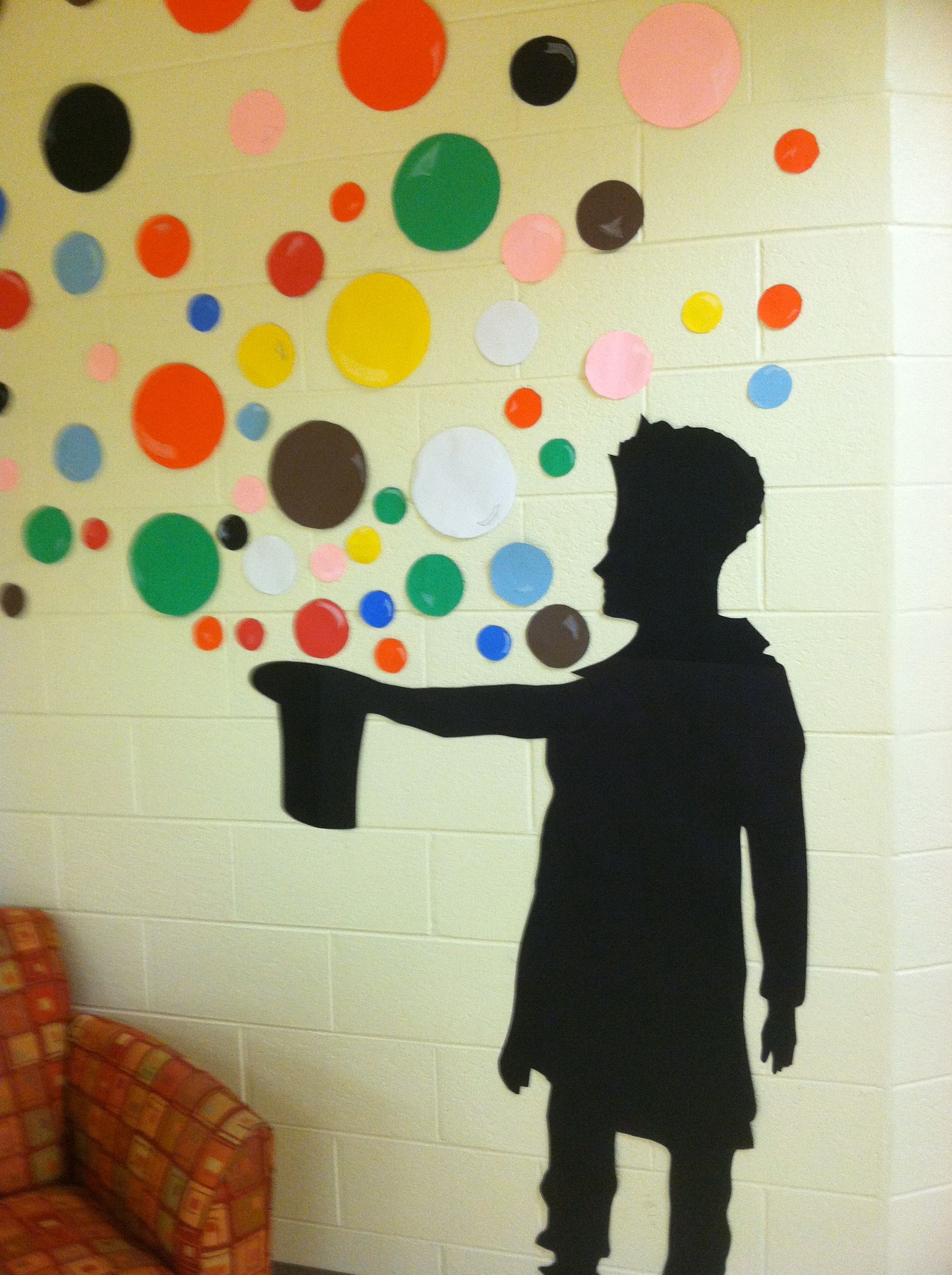
The art teacher at Harvie Elementary, Jordan Flower, has transformed the hallways into a street art exhibit.  The students in multiple grade levels have been learning about Street Art.  Street Art is usually viewed as destructive and “underground”.  However, if you look closely at the work that street artists create, and not so much where it is created, it’s clear that it is art. At last years Oscars, a street artist named Banksy was receiving a lot of attention because of his role in the nominated film Exit Through the Gift Shop.  The film took you on secretive missions to create works on nontraditional canvases around the world.[1. I have watched it 3 times from start to finish.] The students at Harvie are all familiar with street art and graffiti in their communities.  Jordan led them through discussions about art vs. vandalism and the effects, both positive and negative, that can come from street art.

The students at Harvie learned about a couple of different artists and styles, this was a unit studied in Kindergarten through 5th grade.  The 4th graders learned about the art of Kenny Random.  The 4th graders planned and executed a collaborative art piece, based on the work of Kenny Random, that can be found covering the walls of the school. Other pieces of art include arrows based on the work of Above, and a display of graffiti style “tags” of the student’s names.  Below are some images of the pieces around the school as well as Jordan’s lesson plan for the Henrico21 Kenny Random project with 4th grade.

Download the Henrico 21 Lesson Plan

[nggallery id=8]


Weathering and Erosion

I had my first weathering and erosion questions this week.  I decided to combine 3 technologies/applications that I love to use to give my teachers the resources they needed.

Keynote

I created a Keynote slideshow for the kids to use when reviewing the terms weathering and erosion.  It is a simple slideshow that only requires the kids to fill in the blanks with the appropriate terms.  When the students have completed their slides, they can hit “play” and watch the slideshow turn into a self-playing movie with animations.

Click here to download the Keynote template.

Google Earth

Using Google Earth as a tool for teaching weathering and erosion is new for me.  Google Earth is a great tool for teaching Social Studies, but the more I use it, the more I find it useful in other content areas as well.  I searched  the globe for unique land features that have been caused by weathering and erosion.  The pushpins only lead the students to locations, it is the pictures that make the pushpins worth the trip around the world.  You can download the pushpins I created using the link below.  When you click on the downloaded icon (after you unzip the file), it will automatically launch Google Earth, and load the pushpins into your “Places” window.

[nggallery id=6]

 Click here to download the Google Earth pushpins.

Internet Links

I have to admit that collecting the websites below took more time than it should have, I blame this on my ADD.  I started reading all of the information on the sites and I hope your students will enjoy them as well.  There are also a couple of challenging jigsaw puzzles that might get your kids thinking.

Grand Canyon National Park

Carlsbad Caverns National Park

Mount Everest

Oceanside Cliffs Puzzle

Rock Bridge Puzzle

Reflective Friends- Fall Observations

The Reflective Friends (RF) process is nearly complete for my 4 schools for the Fall of 2011.  Glen Allen was selected as one of the pilot schools in the Spring of 2011.  Because of this, they are not officially involved in the RF process this year.  However, they will be doing a round of unofficial observations in November.  The teachers that have participated this year have done a great job.  This is a new process for elementary and it can seem overwhelming at the start.  After Carver, Longdale, and Harvie have been observed I believe that my teachers see the process for what it is, a positive experience that is only in place to help teachers.

Here is what has happened so far this year:

  • 6 teachers from each school were selected to participate, each grade level was represented.
  • Since this was baseline data that was collected, lessons were planned around programs that they were comfortable with using with their students at this point in the year.
  • Using the answers to the previous questions a lesson plan was developed.
  • We made appointments to work with the kids to review the skills that will be needed to make the chosen applications work.
  • An observation team made of up of 2 people visited each room for approximately 40-45 minutes.  The observation teams were made up of an ITRT (Elementary, Middle, or High) and an administrator from another school or Central Office.
  • The observers used the TIP-Chart to evaluate the lessons and provided constructive feedback for the teachers that will help them grow on the TIP-Chart.
  • Two interview panels were setup.  Groups of students and teachers were interviewed to collect additional information about 21st Century Skills.
  • At the end of the school day, the observation team leaders met with the school’s admin team and shared the data and information collected during the observations and interviews.

Just because the Fall observations are complete doesn’t mean that the RF process is complete.  The 6 teachers at each school are going to work with me throughout the year.  We are going to look at the feedback that they received and plan lessons that will help them progress on the TIP-Chart.

The most important idea for you to understand about the RF process is that this is not pass or fail.  RF is meant to be part of a professional development experience.

I am very happy to work with so many great teachers that had an awesome attitude towards this new process.  I am very excited to see the teachers and students grow this year.  RF is not going anywhere, there will be 6 new teachers selected next year.  More updates and news about RF will be shared here later this year.

Applications and tools used during the observations:

Pixie

iPads

Keynote

Pages

Google Earth

ProScopes

ActivVotes

ActivInspire

BuildYourWildSelf.com

Numbers

iPads

The iPads are officially in Kindergarten and 1st grade classrooms across the county. With this initiative this gives each Kindergarten and 1st grade classroom four (4) iPads and two (2) MacBooks. [1. The MacBooks that have been removed from the classrooms will be put on carts.  The carts will be distributed county wide so that each school will have approximately have the same laptop-to-student ratio.]  Each iPad came with a base image that was assembled by the elementary ITRTs and the elementary content specialists.  With the unveiling of the new iPad operating system in October of 2011, we are hoping to put the control of the content that is found on the iPad into the hands  of the classroom teachers that have them.

A website has been developed that explains the Apps that can be found on the iPads currently.

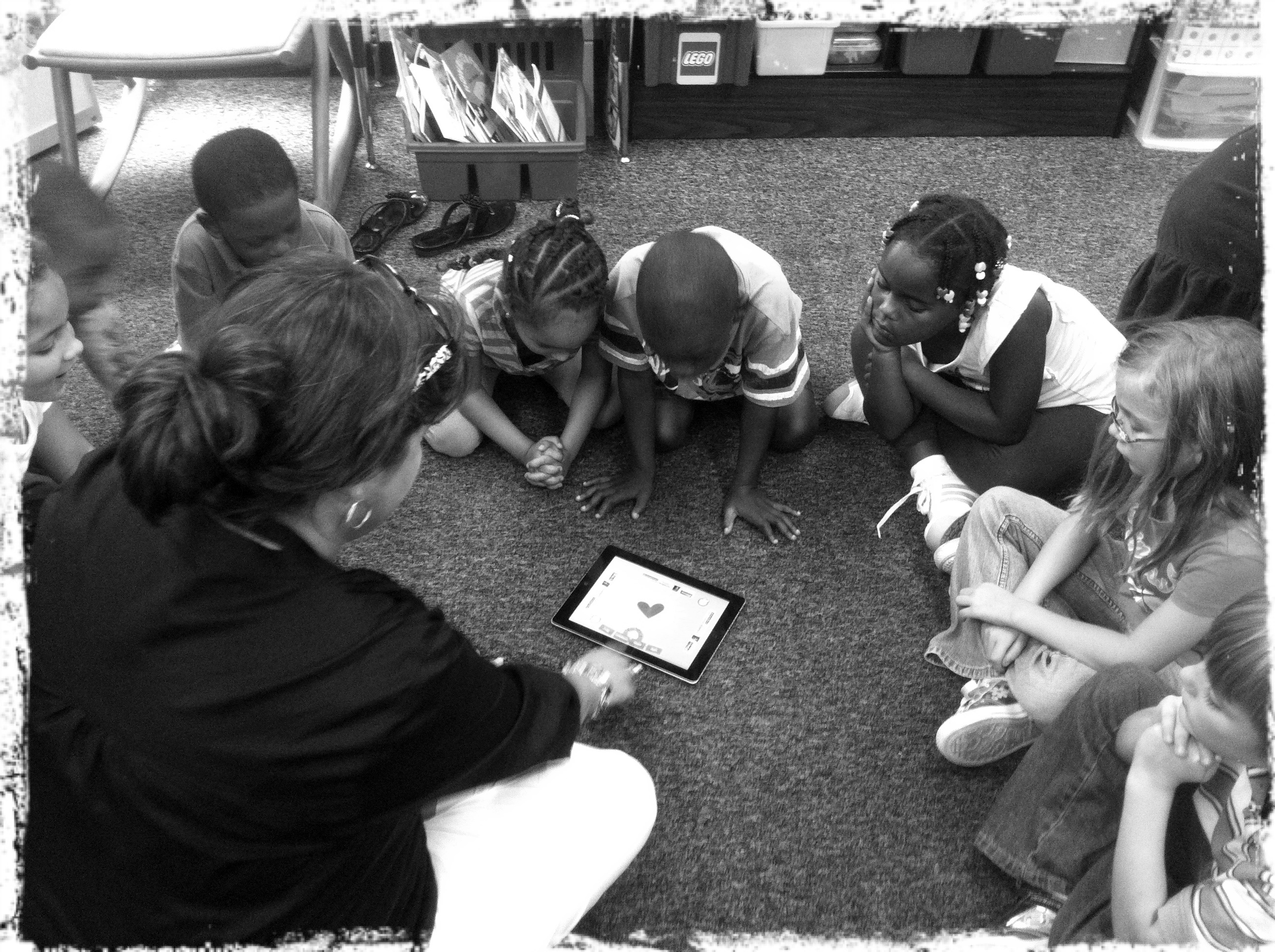
Amy Spiker, a 1st grade teacher at Longdale, introducing her students to the "App of the Day".

The ElemApps site also gives a description of each App and the directions on how to use it.  As we will discover, the kids don’t need a lot of instruction.  The touch feature is very intuitive for the students that are entering our schools.

The cases for the iPads will be arriving shortly and they will be distributed as soon as they are received.  In the meantime, HCPS would like to have the iPads out in the classrooms and more importantly, in the hands of our students.

If you are teaching in a 3rd, 4th, or 5th grade classroom, don’t fret.  There will be opportunities to use the iPads with your students as well. As we have already heard from HCPS administrators, the future of computers in our classrooms may be with “tablets” instead.

Reflective Friends

The Reflective Friends (RF) process has made it to Henrico County’s elementary schools!  Before you say anything or before your eyes roll back into your head, Reflective Friends is what we have been wanting for a long time.  I am very excited about RF being in the elementary schools this year.  The process gives teachers an opportunity to receive positive feedback from observers that are not from their buildings.  The observers are looking for the characteristics of a 21st Century Lesson.  The students and teachers will be scored on the TIP-Chart that we have become familiar with.  This is the same chart that is used to score Henrico 21 projects.

Here is the process broken down:

  • 1 teacher from each grade level will be chosen to participate.  This gives a good overall snapshot of an elementary school.
  • Each teacher plans their lesson using the TIP-Chart.  The teachers are encouraged to collaborate with their ITRT with the planning of the lesson.
  • Observations last around 30-40 minutes.  The observers are other ITRTs from the county as well as principals and other HCPS administrators (including Central Office).
  • Other teachers (not officially observed) and students will be interviewed by the panel.
  • The data and comments from each of the 6 observations and the interviews are compiled into one report and shared with the admin team at that school.

I am hoping to repeat this process in the spring in order to show authentic student and teacher growth during the 2011-2012 school year.

Here are the teachers that will be participating this year:

« Older posts